
Heather and her staff blog about all things pelvic health related
Including male, female, pediatric, transgender and nonbinary chronic pelvic pain, urinary dysfunction such as incontinence, prostatitis, sexual dysfunction, pregnancy, back pain, upcoming events and more.

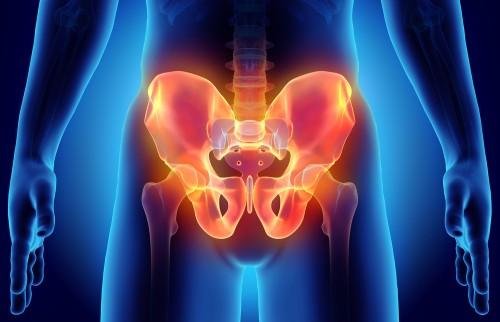
This article will review how prostatitis can cause or contribute to chronic pelvic pain and what pelvic floor therapy can do to help alleviate it.
The Condition
Chronic nonbacterial prostatitis is sometimes described as a “headache in the pelvis” with pain symptoms affecting urinary and sexual function. It’s a tricky condition because as “nonbacterial” suggests, the pain and inflammation is not tied to a known bacterial infection, which can confuse both the patient as well as their healthcare providers. Yet, the pain is real and their negative affects on quality of life are real as well. The pain caused by nonbacterial prostatitis can be disabling, preventing participation in valued activities and causing isolation and depression.
Prevalence
According to Harvard Medical School, prostatitis accounts for about 1.8 million visits to the doctor’s office in the United States each year. Between 9% to 16% of men of all ages experience prostatitis.

Most people experience occassional constipation. Constipation isn’t just the inability to have a bowel movement, and includes the difficulty associated with bowel movements. Travel, inactivity, illness, and certain over the counter medications taken “as needed” commonly result in short-term or acute constipation. Constipation lasting longer than three months is considered chronic constipation. Chronic constipation should be treated by a doctor to prevent health complications.
Chronic Constipation: Are you and your healthcare practitioner talking about the same thing?
Clear communication is essential to working with doctors, but the general public often has only a rudimentary understanding of medical terms – including constipation. There is often a gap between the physician and the patient’s perception of constipation which can lead to confusion. (1, 2, 7, 10) A study of people who thought they had constipation showed that only a third actually fit the criteria for constipation, while the rest actually had Irritable Bowel Syndrome or other gastrointestinal disorders. (9) So what are the criteria for constipation?

Date:
Sunday, November 5, 2017
Time:
6:30-9:30PM
Venue:
The Rendition Room @ Vitello’s
4349 Tujunga Ave., Studio City, CA 91604
Drinks and appetizers will be provided!

Pelvic floor physical therapy is one of the best kept secrets in medicine.
Recently, I was on a plane flight and sat next to two women. They were very chatty with one another and quickly swept me up into their conversation. Inevitably, in situations like this, everyone asks “So what do you do for a living?”. My answer always used to be “I’m a physical therapist”. The past couple of years, however, my standard response is “I’m a physical therapist, but let me tell you about what kind of physical therapist I am”. Then I go into the diagnoses I treat related to bowel, bladder and sexual health and, in general, how I treat them. Across the board, their reaction is a mix of astonishment and genuine interest. The follow up dialogue is always eye-opening for them, and more often than not, they will report either knowing someone close to them as having one of these pelvic floor issues, or they have it themselves.
In my last post, “Why You Should Be Doing Kegels NOW”, I went over the various diagnoses that tend to benefit most from doing pelvic floor muscle exercises. However, there are MANY issues and diagnoses related to the pelvic floor that are NOT appropriate to prescribe pelvic floor muscle exercises for. In fact, with certain diagnoses, doing Kegels can actually be harmful and counterproductive to your symptoms. When treating patients, physical therapists should always keep in mind that there are proper and improper times to strengthen a muscle. Generally speaking, you should only strengthen a muscle that is weak and overly lengthened. If a muscle in a high state of rest (guarded, hypertonic, in spasm or with limited flexibility), the LAST thing you should do is continually contract it. This will only further shorten/tighten an already short/tight muscle and likely make your problem worse, or at the very least, prevent if from getting better. In the case of the pelvic floor, this could exacerbate symptoms such as painful intercourse, urinary urgency and/or frequency, and more.
Here are the primary diagnoses that I generally recommend avoiding Kegel exercises (and even core strengthening) with, at least in the early stages of treatment:
I am proud to announce the official book release today of Sex Without Pain: A Self-Treatment Guide To The Sex Life You Deserve. It is available on Amazon.com, iBooks and other retailers.
43% of women will experience pain during sex or other sexual problems – why isn’t this a public health concern? https://www.prweb.com/releases/2014/09/prweb12156888.htm
Join us in helping to increase the awareness of female sexual dysfunction, including vaginismus, vulvodynia, vulvar vestibulitis, overactive pelvic floor and more. You are not alone if you or your loved one are experiencing painful intercourse. There is help!

Wondering Why You Should be Doing Kegels?
Read on for the whys and why nots
In my early days of being a pelvic floor PT, I was convinced I had the answer to all the woes of the pelvic floor. One word – Kegels. As I’ve developed professionally over more than 15 years, I realized Kegels have their place. However, they are not the answer for all things pelvic floor. They should be used, in general, if muscles are weak because they are overlengthened/overstretched, or in a good place, just weak. There are specific instances when Kegels (also known as PC or pelvic floor muscle contractions) are the answer. I’m a firm believer in doing a Kegel program combined with a core strengthening program that will address the bigger picture. Here’s who should be doing Kegels and why:
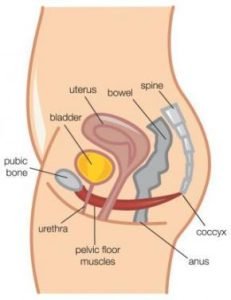
What are Kegels?
Kegels are a contraction of a group of muscles known as “pelvic floor muscles”, sometimes referred to as the “PC muscle”. PC is short for “pubococcygeus”, the name of just one of the many pelvic floor muscles.
However, over 15 years of practice, I have found that simply telling a patient to “Do Kegels” is usually not enough. Often, women perform pelvic floor exercises incorrectly, or do not do an amount appropriate for their strength levels. This finding has been confirmed by Bump et al in an August 1991 article from the American Journal of Obstetrics & Gynecology, “Assessment of Kegel pelvic muscles exercise performance after brief verbal instruction”. While the article was published quite some time ago, the data is still relevant and referred to frequently in current research studies. The results of that study on verbal instruction were 60/40 (60% could/40% could not perform a pelvic floor contraction or, Kegel, correctly). This article also stated that a very high percentage of women that were doing Kegels incorrectly were not only doing them wrong, but doing them in such a way that they were actually making their incontinence (or light bladder leakage) WORSE (about 25% of the women studied). I have seen this initial frustration with many of my own patients over the years, not realizing before they started physical therapy why they were getting worse. I continue to cite this study, as despite it’s age, it was really revolutionary in identifying why so many women think Kegels do not work.
But I’m a male with incontinence. Should I be doing Kegels, too?
YES! Men have a pelvic floor, too and should absolutely be doing Kegels if there is weakness in that area.
How do I know if I am doing Kegels correctly?
Chances are if you have basic stress, urge or mixed incontinence or light bladder leakage, and see no improvement in your symptoms, you may not be doing your Kegels appropriately. This is not to say that you don’t know how to do a Kegel, but you many not be doing the proper routine based on your strength levels.
How many do I do? How long should I hold them for? There are different types of Kegels?!
Products We Love
Amazon
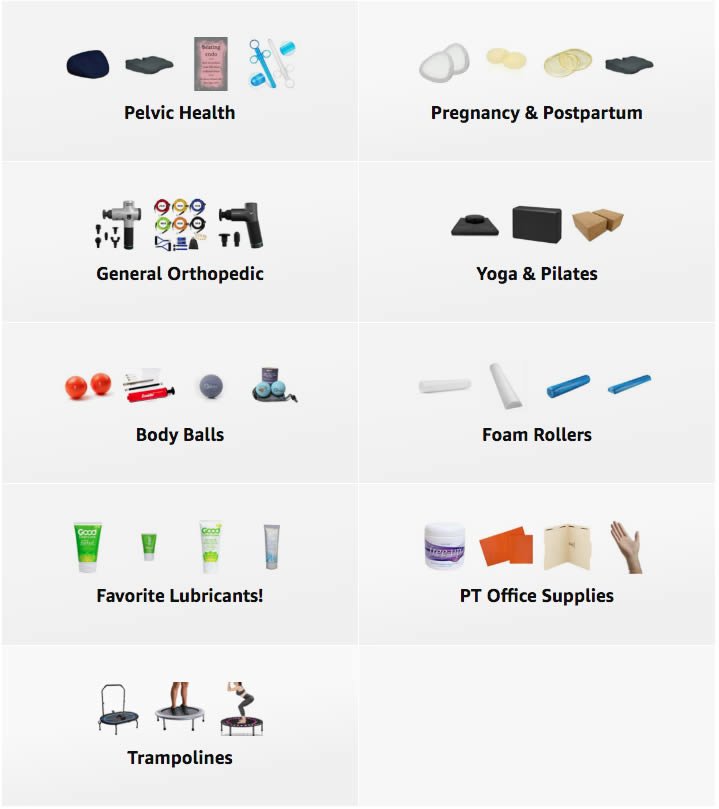
A Curated List of Excellent Items at Amazon
From books and workout accessories to general othopedic items and even personal lubricants!
When you visit our space on Amazon you will find a wide variety of products that will help in your quest to not just better pelvic health, but to your overall health and wellbeing too! Click anywhere in this ad to go there now and find what you need!
SRC Health
Designed by women for women.
Whilst recovering in hospital after the birth of her first child, our founder Sinead O’Donovan decided that new mums deserved more help getting back to their busy lives. Drawing on her extensive medical and bio-mechanical background, Sinead envisaged a garment that would be comfortable for new mums to wear all day whilst giving her all the support she and her body need.

In Heather’s own words:
I thought it’s finally time to share one of my post-op recovery secrets — I’ve been loving that supported life in my @srchealth compression leggings since my hip labral repair surgery last October. When I wear them, my chronic left SI joint hurts less and my legs feel like they’re being micro-massaged all day long!
Click here to shop the full SRC Health line, and use code FEMINA at checkout for special pricing!
MedAmour Body Safe Products and Services
Designed by women for women.
Whilst recovering in hospital after the birth of her first child, our founder Sinead O’Donovan decided that new mums deserved more help getting back to their busy lives. Drawing on her extensive medical and bio-mechanical background, Sinead envisaged a garment that would be comfortable for new mums to wear all day whilst giving her all the support she and her body need.

Click here and use code FEMINAPT to save $10 off your first $50 purchased.